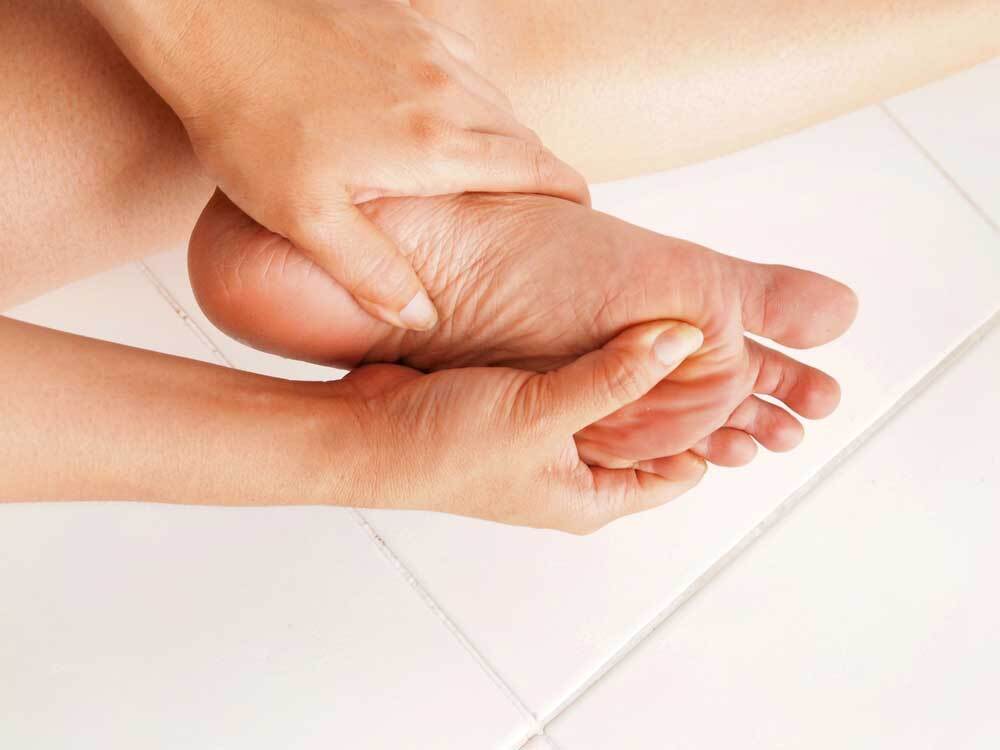
Most foot pain is not a footwear problem or a part of aging. It is a strength and mobility problem. Weak feet and weak toes lead to plantar fasciitis, poor balance, and pain that creeps up into the knees, hips, and low back.
At Skare Spine & Performance in Rochester, MN, we fix foot pain at the source by rebuilding foot strength, restoring mobility, and training the feet to do their job again, rather than just managing symptoms with orthotics and rest.
Aside from low back pain, foot pain is one of the most common issues people deal with over a lifetime. Nearly one in three people will experience it at some point. Yet most people live with it for years. They write it off as aging, bad shoes, or normal wear and tear.
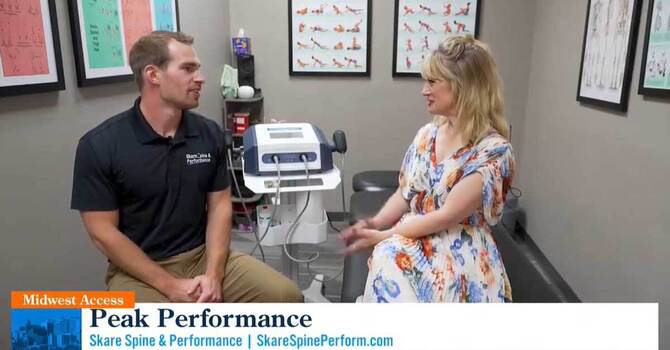
We recently talked about this on Midwest Access, and it opened up a conversation we have in our Rochester clinic almost every week. Why foot pain is so common, and why the usual fixes fall short.
Here is what is actually going on, and what works.
Why Is Foot Pain So Common
Your feet are built to do a lot. Each foot has 26 bones, 33 joints, over 100 muscles, tendons, and ligaments, and thousands of sensory nerve endings.
Then we spend our whole lives stuffing them into shoes that look nothing like a real foot and ask nothing of them.
Over time, this leads to reduced mobility, weak foot and toe muscles, poor sensory input from the ground, and altered movement patterns. The pain creeps in slowly and sticks around.
The foot is not broken. It just stopped being asked to work.
Are Cushioned Shoes Actually Making Foot Pain Worse
Most people assume that more cushion and more support are always better. In the short term, it can help, but in the long term, too much cushioning can weaken the foot.
Your feet rely on proprioception. That is the sensory feedback that tells your brain where your body is in space. Thick padding mutes that feedback.
Each foot has over 100,000 sensory receptors that are begging to feel the ground, and less feedback means less muscle activation, less stability, and less strength over time.
The more we protect the foot, the less it has to do. And a foot that does nothing gets weak.
Does Going Barefoot Help Foot Pain
For a lot of people, yes. Barefoot time at home is one of the simplest ways to wake the feet back up.
Even five minutes a day can help activate foot muscles, improve balance, and restore natural movement.
If you have worn restrictive shoes for decades, ease into it gradually. If you are younger or more active, barefoot time can be a powerful way to rebuild foot function faster.
What Is Functional Footwear
If barefoot is not always practical, the next best thing is functional footwear.
Functional footwear has a wide toe box so the toes can spread, minimal heel elevation, a flexible sole that lets you feel the ground, and a proper fit through the midfoot and heel.
This is not the same as buying a wide shoe. The point is letting the toes work the way they were designed to.
Who Gets Foot Pain
Foot pain does not care how old you are. In our Rochester clinic, we see plantar fasciitis in runners and pickleball players, Achilles tendinopathy in active adults, ankle sprains in youth athletes, and chronic foot pain and arthritis in older adults.
Why Toe Strength Matters More Than People Think
This is the part that surprises patients the most.
Weak toes are the strongest predictor of plantar fasciitis. Toe strength is one of the best predictors of fall risk in older adults.
Weak feet do not just cause pain. They affect balance, confidence, and long-term independence. Foot health is not only about pain relief. It is about longevity.
How We Build Stronger Feet at Skare Spine & Performance
Foot care is never one-size-fits-all. We meet people where they are and build from there.
Depending on the person, that can include:
- Relearning how to use the toes. Many people can no longer move their toes independently. That is not a failure. It is an adaptation. We start with basic toe activation to restore joint mobility and improve sensory awareness.
- Balance training. Simple single-leg work can dramatically improve foot and ankle strength and cut injury risk.
- Targeted strength tools like the ToePro. We use devices that directly strengthen the toes and intrinsic foot muscles. Most programs skip this entirely.
- Progressive strength training. For athletes and active adults, we load the foot and ankle into a full-strength program to build real durability.
- Footwear guidance. Sometimes the biggest win is simply wearing shoes that let the foot function again.
Why Stretching, Orthotics, and Marble Pickups Often Fail
People come in frustrated because they have already tried stretching, band exercises, marble pickups, and orthotics.
Those things can help in the short term. They usually do not build real foot strength.
Orthotics have their place. But used on their own, without rebuilding strength, the foot never regains the ability to support itself. Our goal is not just support. It is a function.
How Your Feet Affect Your Knees, Hips, and Low Back
Foot function affects everything above it. Ankles, knees, hips, and the lower back all depend on it.
Poor foot mechanics can send pain up the chain. Strong, responsive feet support better movement everywhere.
What you do in your 30s, 40s, and 50s directly shapes how you move in your 70s, 80s, and beyond. Building foot strength now is one of the most overlooked investments in long-term health.
Can a Chiropractor Help With Foot Pain?
Yes. Most people think chiropractic care is only about the spine. We assess and treat the entire musculoskeletal system, including the feet.
Foot pain is rarely just a foot problem. It is usually tied to how the whole body moves.
How to Get Help for Foot Pain in Rochester, MN
If you are dealing with foot pain or you just want to get ahead of balance, strength, and longevity, the first step is a comprehensive assessment.
We will help you understand why your foot pain is occurring, what is contributing to it, and how to rebuild strength and function rather than just manage symptoms.
Foot pain is common. It is not inevitable. With the right approach focused on mobility, strength, and function, you can build feet that support you for decades.
Frequently Asked Questions About Foot Pain
Can a chiropractor treat foot pain and plantar fasciitis? Yes. At Skare Spine & Performance in Rochester, MN, we treat foot pain, plantar fasciitis, Achilles tendinopathy, and ankle issues by addressing the root cause. That means rebuilding foot and toe strength, restoring joint mobility, and using tools like shockwave therapy and targeted strengthening rather than only managing symptoms.
What is the most common cause of foot pain?
Most chronic foot pain comes down to weak foot and toe muscles combined with limited mobility. Decades of cushioned, restrictive footwear can weaken the foot, leading to plantar fasciitis, poor balance, and pain that can radiate up into the knees, hips, and low back.
Are minimalist or barefoot shoes good for your feet?
For many people, yes, when introduced gradually. Functional footwear with a wide toe box, minimal heel elevation, and a flexible sole lets the foot move and strengthen naturally. People who have worn supportive shoes for years should transition slowly to avoid overloading weak tissue.
Do orthotics fix plantar fasciitis?
Orthotics can help in certain cases, but on their own, they often do not solve the problem. They support the foot without strengthening it, so the foot never regains the ability to support itself. Lasting relief usually requires rebuilding actual foot strength.
How is toe strength connected to fall risk?
Toe strength is one of the best predictors of fall risk in older adults. Strong toes and feet improve balance, stability, and confidence, which protects independence as you age. This is why we treat foot strength as a longevity issue, not just a pain issue.
How do I get started with foot pain treatment in Rochester, MN?
Start with a comprehensive assessment at Skare Spine & Performance. Call (507) 200-0449 or visit skarespineperform.com to schedule. We will identify why your foot pain is happening and build a plan to rebuild strength and function.

Nate Skare
Contact Me